
Tikal, Guatemala
One of the most powerful and important cities of the ancient Mayan civilization.
Tikal is an ancient Mayan archaeological site located in the Petén region of northern Guatemala. Once a major political, economic, and ceremonial center of the Maya civilization, it is now part of Tikal National Park, a UNESCO World Heritage Site recognized for both its cultural and natural significance.
Key facts
Location: El Petén, Guatemala
Area: 57,600 hectares (Tikal National Park)
Period of occupation: c. 600 BC – AD 900
UNESCO inscription: 1979 (criteria i, iii, iv, ix, x)
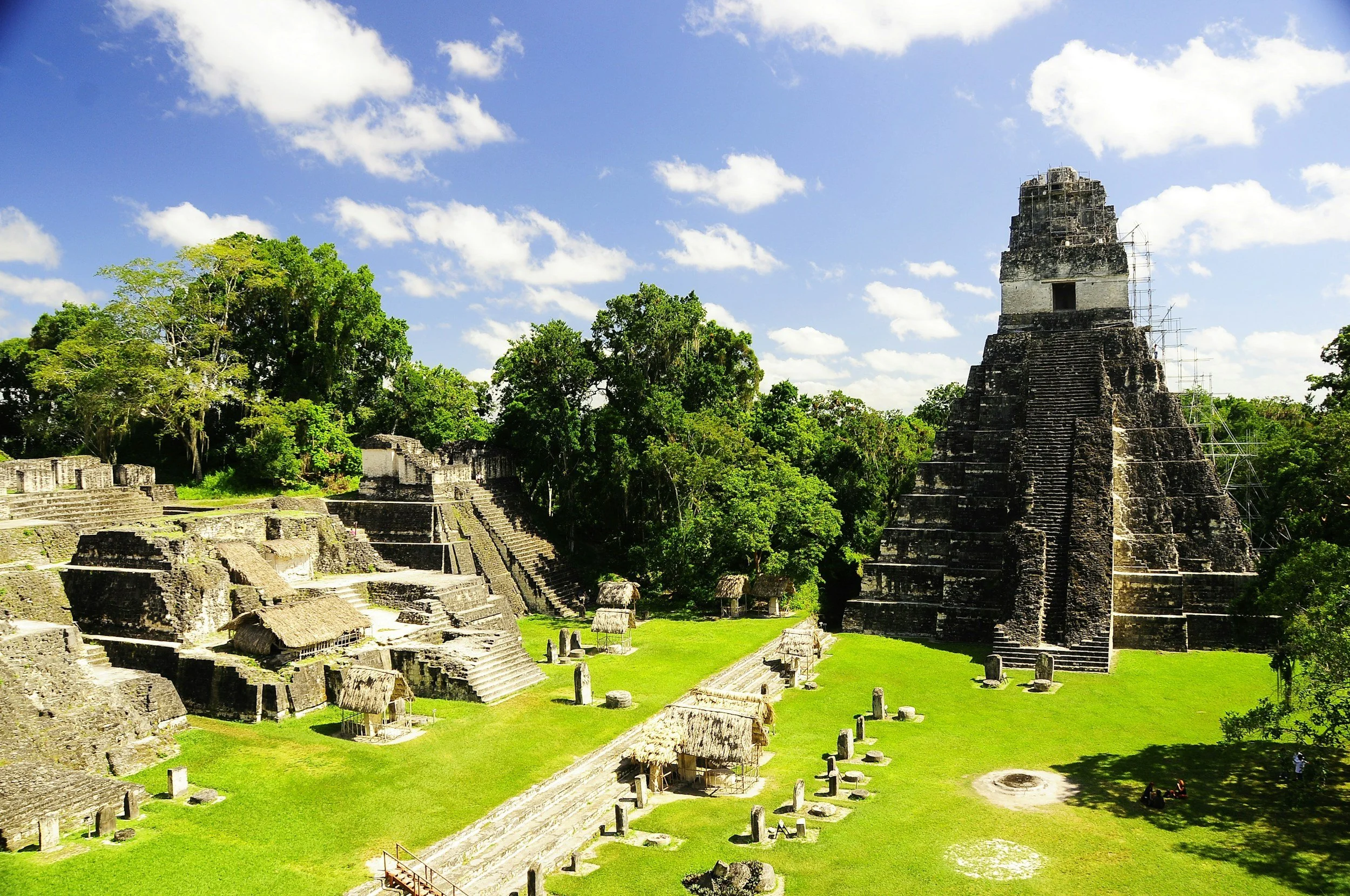
Notable structures: Temples I–VI, Great Plaza, Lost World Complex
Archaeological and historical significance
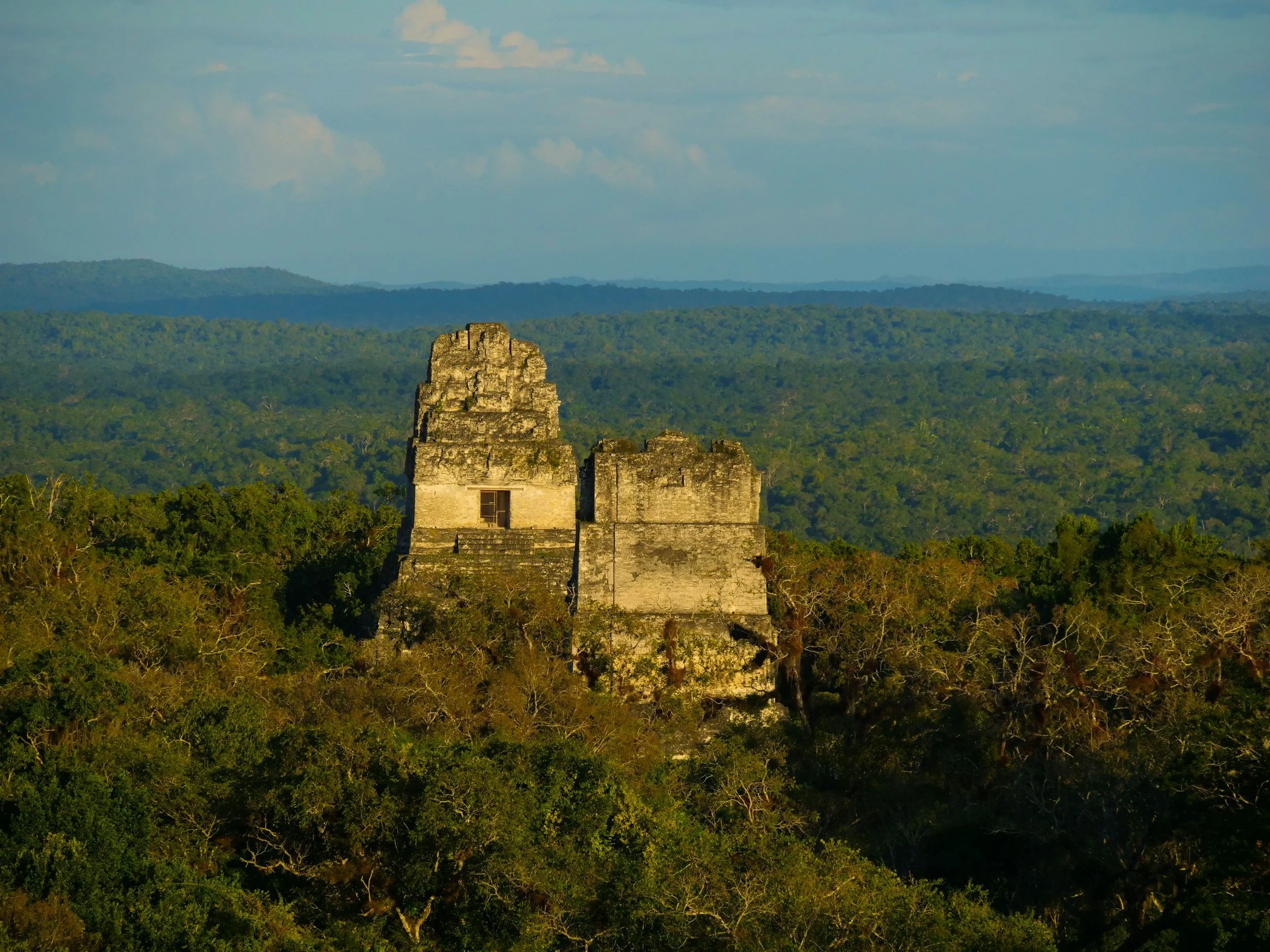
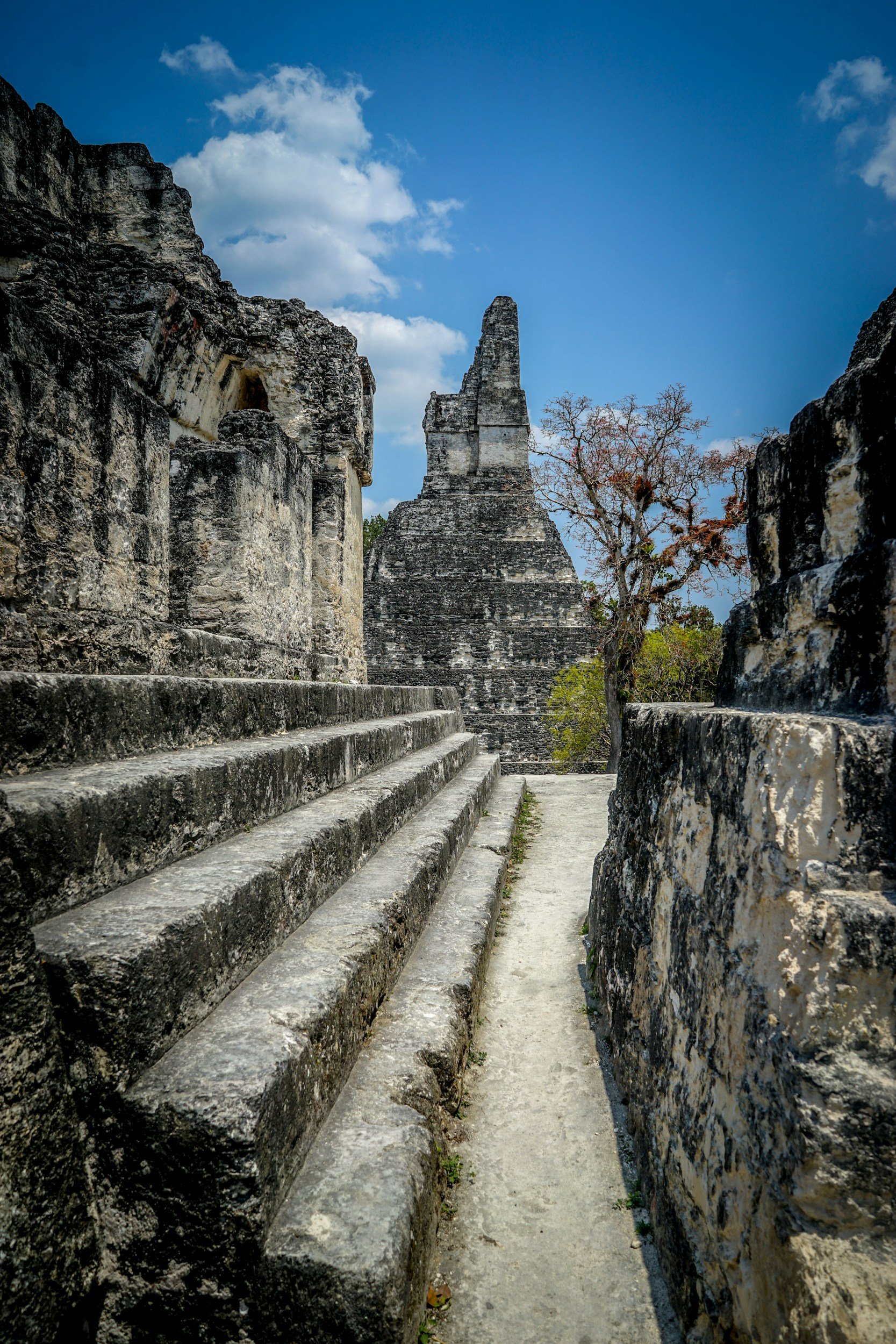
Tikal emerged as one of the most powerful Maya city-states between the 4th and 9th centuries AD. Archaeologists have identified over 5,000 structures within an urban core of about 16 square kilometers, including stepped pyramids, palaces, ball courts, and residential complexes. Stelae and hieroglyphic inscriptions record the rule of 33 kings over a period exceeding a millennium, linking Tikal to other major Maya centers such as Teotihuacan, Calakmul, and Copán. The site’s monumental architecture, especially Temple I (Temple of the Great Jaguar) and Temple IV (65 m high), exemplifies the Classic-period Maya aesthetic and engineering skill.
Natural environment
Situated in the heart of the Maya Forest within the larger Maya Biosphere Reserve, Tikal’s parklands protect a mosaic of tropical rainforest, savanna, and wetlands. The ecosystem supports more than 200 tree species, 330 bird species, and a rich array of mammals including jaguar, puma, and spider monkey. This integration of dense biodiversity with monumental ruins makes Tikal one of the few World Heritage Sites inscribed for both cultural and natural criteria.
Discovery and preservation
Although known to local communities, Tikal was first documented for scientific study in 1848. Major excavations and restorations were carried out by the University of Pennsylvania and Guatemala’s Institute of Anthropology and History in the 1950s–60s. Declared a national park in 1955, Tikal is now managed under Guatemala’s protected-area framework. Ongoing conservation focuses on balancing archaeological preservation, wildlife protection, and sustainable tourism in a tropical environment.