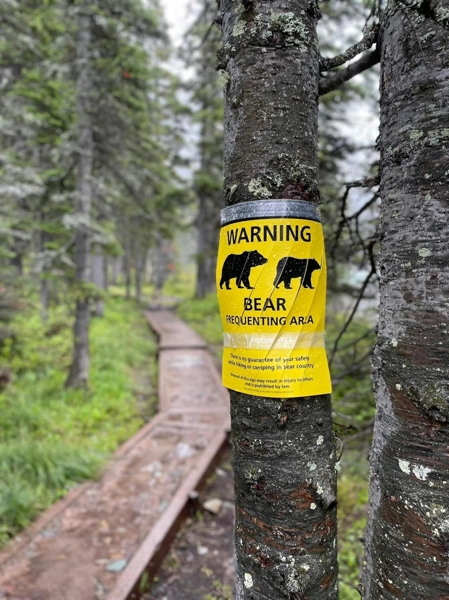
Bear Safety 101: What Every Hiker Should Know Before Hiking in Bear Country 🐻
One of the most unforgettable wildlife moments of my life happened during my first visit to Grand Teton National Park in the summer of 2021. My family and I were lucky enough to catch a glimpse of the legendary Grizzly Bear 399 and her cubs.
Like so many others who love the outdoors and wildlife, I kept track of her story over the years. When she died, it was heartbreaking. Bear 399 had become more than just a bear to many people. She represented the wild beauty of places like Grand Teton and reminded us how special it is to witness animals in their natural habitat.
Seeing a bear in the wild is incredible, but it is also a reminder that being in bear country comes with responsibility. Understanding bear behavior, knowing how to avoid encounters, and knowing what to do if one happens can make all the difference.
In this guide, I’m covering the types of bears you may encounter in the United States, how to respond to each, how to use bear spray properly, where bears are commonly found, essential gear to carry, and an important reminder that some national parks do not allow bear spray. Always check the rules for the specific park you’re visiting before your trip.
Types of Bears in the US and Where to Find Them
In the United States, you're most likely to encounter two main species of bears: black bears and brown bears. Grizzly bears are a subspecies of the brown bear.
Each type has distinct behaviors and habitats, making it important to know where you're hiking and how to respond.
Black Bears
Black bears are the most common bear species in North America. They can vary in color from black to brown or cinnamon.
They are commonly found in:
• The Appalachian Mountains
• The Rocky Mountains
• The Pacific Northwest
• Much of the Eastern United States
States like North Carolina, Tennessee, California, and Colorado all have healthy black bear populations.
Black bears are generally shy and will often avoid humans if given space.
Brown Bears
Brown bears are much larger and more powerful than black bears.
They are primarily found in:
• Alaska
• The Northern Rocky Mountains
• Parts of the Pacific Northwest
Brown bears include the well-known grizzly bear.
Grizzly Bears
Grizzly bears are a subspecies of brown bear and are typically found in:
• Alaska
• Wyoming
• Montana
• Idaho
• Western Canada
They are recognizable by the large shoulder hump on their back.
Grizzlies are extremely protective of their cubs and territory, which is why hikers must be especially cautious in grizzly bear country.
Quick Bear Safety Reminder
Understanding the differences between bear species—and being properly prepared—can help you react appropriately during an encounter. See the Recommended Bear Safety Gear section at the end of this article.
| Situation | Black Bear | Brown / Grizzly Bear |
|---|---|---|
| First reaction | Stand tall, raise your arms, and speak loudly so the bear recognizes you as human not prey | Stay calm, speak calmly, and slowly back away |
| Running | Never run — it can trigger a chase instinct | Never run — it can trigger a chase instinct |
| Eye contact | Maintain awareness without staring aggressively | Avoid direct eye contact |
| If the bear approaches | Continue backing away and make yourself look bigger | Continue backing away slowly while preparing to use bear spray if the bear continues approaching |
| If an attack occurs | Fight back aggressively using anything available | Play dead if it is a defensive attack |
Why Bear Encounters Require Different Responses
Not all bears behave the same way, which is why the recommended response can vary widely by species. Understanding these differences helps explain why certain actions—like fighting back or playing dead—are advised in specific situations.
Black Bears
Black bears are generally more timid and often avoid people when they become aware of them. Most encounters happen when a bear is surprised, protecting food, or has become accustomed to human food sources.
Because black bears are smaller and less aggressive than grizzly bears, the goal during an encounter is to intimidate the bear and make it see you as a human or threat rather than prey.
That’s why the recommended response is to:
Make yourself look larger
Speak loudly and assertively
Back away slowly without running
If a black bear attacks—which is rare—fighting back is recommended. In most cases, a black bear can be driven away by appearing confident and aggressive.
Brown Bears and Grizzly Bears
Brown bears and grizzlies are much larger, more powerful, and more defensive than black bears. Many encounters occur when a bear is surprised at close range or when a mother is protecting her cubs.
Unlike black bears, grizzlies are more likely to view a confrontation as defensive rather than predatory. As a result, a person's aggressive behavior can escalate the situation.
That’s why the recommended response is different:
Stay calm
Avoid direct eye contact
Slowly back away
Use bear spray if the bear approaches within range
If a defensive attack occurs and you are unable to use bear spray in time, playing dead can signal to the bear that you are no longer a threat, which may cause it to stop the attack and move away.
Understanding these behavioral differences is one of the most important parts of staying safe in bear country. Knowing how to react appropriately can help prevent a situation from escalating and protect both you and the bear.
How to Use Bear Spray Properly
Bear spray is one of the most effective deterrents when you're in bear country, especially where brown and grizzly bears roam. Here’s how to use it correctly:
Keep It Accessible: Bear spray needs to be within easy reach, such as in a holster, not buried in your backpack.
Remove the Safety Clip: Be sure the safety clip is off before spraying to avoid wasting precious seconds.
Spray When the Bear is 30-40 Feet Away: Wait until the bear is close enough but not too far. Bear spray has a range of 30-60 feet.
Aim for the Bear’s Face: Create a cloud of spray in front of the bear to disorient and deter it.
Leave the Area: Once the bear retreats, leave the area promptly, but do not run.
For peace of mind in bear country, I rely on Counter Assault Bear Spray—it’s compact, easy to use, and highly effective at deterring both brown and grizzly bears. If you choose to carry bear spray, make sure it’s always within easy reach. I recommend using a Backpack Cross Draw Holster to keep it accessible and ready when you need it most.
💡 My Bear Spray Preference
Personally, I don’t typically carry bear spray when hiking in areas known to have only black bears. Black bears are generally less aggressive than grizzlies, and with the right precautions—making noise on the trail, staying aware of your surroundings, and giving bears space—they often avoid confrontation.
That said, if carrying bear spray makes you feel safer, it’s always a reasonable precaution to bring it along.
Important: Travel Restrictions: Don’t fly with it!
Before traveling to bear country, it’s important to know that bear spray is prohibited on commercial aircraft.
Bear spray cannot be packed in carry-on luggage or checked baggage, as it is considered a compressed irritant weapon under airline safety regulations.
If you are flying to a destination where bear spray is recommended—such as areas with grizzly populations, like Yellowstone National Park or Grand Teton National Park—plan to purchase it upon arrival. Many outdoor stores, visitor centers, and national park shops sell bear spray specifically for visitors.
If you are driving to your destination, you can transport bear spray in your vehicle without issue.
National Parks that Do Not Allow Bear Spray
While bear spray is recommended in many parks with grizzly populations, some parks do not allow it at all.
Bear spray is prohibited in:
Yosemite National Park
Sequoia National Park
Kings Canyon National Park
Lassen Volcanic National Park
These parks have only black bears, not grizzlies, which is one reason they rely more heavily on strict food-storage rules than on bear spray. In Sequoia and Kings Canyon, the National Park Service actually classifies bear spray as a weapon, making it illegal to possess inside the parks.
Park rules can change, so it’s always a good idea to check the official park website before your trip to confirm current regulations.
How Human Behavior Can Put Bears at Risk
Most bears do not seek out people. In many cases, problems begin when bears start associating humans with food.
When people intentionally feed bears—or leave food, trash, or scented items unsecured—bears can quickly learn that human areas are easy places to find a meal. Once a bear becomes food-conditioned, it may begin approaching campsites, trails, or towns more frequently.
Unfortunately, bears that lose their natural fear of humans often become dangerous. When that happens, wildlife managers sometimes have no choice but to relocate or euthanize the animal.
In other words, irresponsible human behavior can ultimately lead to a bear being killed.
Another growing issue in popular parks is people getting too close to wildlife to take photos. Bears may appear calm, but they are still wild animals that deserve space. Approaching them not only puts people at risk but also stresses the animal, potentially creating dangerous situations.
This is why the Leave No Trace principles emphasize respecting wildlife:
Never feed wild animals
Observe wildlife from a distance
Store food and scented items properly
Avoid approaching animals for photos
By following these simple guidelines, we help protect both ourselves and the wildlife that makes these places so special.
A good rule of thumb is to always maintain a safe distance. Many parks recommend staying at least 100 yards (about the length of a football field) away from bears.
When we respect wildlife and behave responsibly outdoors, we help ensure that bears remain wild—and that future hikers can experience the same incredible moments in nature.
Final Thoughts: Respect Wildlife and Stay Safe
Being in nature is a privilege, and staying safe in bear country is about respect—for both wildlife and ourselves. As someone who encourages others to step outside and embrace outdoor adventures, I feel it’s important to share these tips so we can explore responsibly.
Encounters with wildlife are some of the most incredible moments we can experience outdoors. Seeing Bear 399 and her cubs in Grand Teton is something I will never forget, and moments like that remind us why protecting these wild places—and the animals that live there—matters.
With the right knowledge, preparation, and respect for nature, you can explore bear country confidently while helping keep both people and wildlife safe.
Looking to gear up for your next adventure? Check out my Recommended Bear Safety products listed belowto ensure you’re fully prepared for any encounter.
Stay safe and happy trails. 🌲🐾
Recommended Bear Safety Gear
When you’re in bear country, the right gear can make all the difference. Here are some essentials you should have:
Jaunt Bear Canister (450 model): Perfect for a one-person weekend hiking trip, this bear-resistant food canister is essential for keeping bears out of your supplies. Prepare your food, eat, and store your canister at least 100 yards downwind from your tent. Place it on the ground, hidden in brush or behind rocks. Be sure not to store it near a cliff or water source, as bears may knock the canister around or roll it down a hill. This bear-resistant food container is lightweight and effective for hikers.
The Mitey Bear and Critter Bag: While a bit pricy, this is an excellent option for those who prefer to hang their food. When using this, tie the bag securely, then hang it at least 12 feet above the ground and at least 6 feet away from the tree trunk or any branches to prevent bears from reaching it.
Odor-Proof Bags: Keep all your food and toiletries in reusable smell-proof ziplock bags by Smellproof to minimize attracting bears. [Here’s a smell-proof bag](affiliate link) to use in combination with your bear canister or critter bag.
Safety Whistle: I always carry a safety whistle, which many backpacks come with. However, I also wear a Titanium whistle by Vargo around my neck for quick access. It can help scare a bear away in some situations.
Backpacker / Cross Draw Neoprene Bear Spray Holster
If you decide to carry bear spray, keeping it easily accessible is essential. The Counter Assault Backpacker / Cross Draw Neoprene Bear Spray Holster attaches to most backpacks or hydration packs, allowing you to carry your bear spray where it’s easy to reach in case of an encounter. The cross-draw design keeps it secure while hiking and helps ensure you’re not digging through your pack when seconds matter.Bear Horn: While I personally don’t carry a bear horn, some hikers and campers swear by it. If you’re interested, REI’s Frontiersman Bear Hornis a popular option. It’s great for camping, but I wouldn’t carry the additional weight on a backpacking trip; that is just my personal preference.
Bear Bells: Some hikers attach bear bells to their backpacks to make noise as they walk, hoping the sound will alert bears to their presence. Personally, I don’t use them. I find the constant tinkling distracting, and it detracts from the peaceful experience of being in nature.
There is also some debate about their effectiveness. Studies suggest that the sound of bear bells is often too quiet to travel far, and bears may not associate the noise with humans. Many wildlife experts recommend making human-like noise instead—such as talking, clapping, or calling out occasionally—especially in dense vegetation or around blind corners.
There’s even an old trail joke about this:
How do you tell the difference between black bear poop and grizzly bear poop?
Black bear scat has berries and seeds.
Grizzly bear scat has bear bells and pepper spray in it.Humor aside, the safest approach is simply to make your presence known while hiking.
Affiliate Disclosure: Some of the links in this post are affiliate links. This means if you click on the link and purchase the item, I may receive an affiliate commission at no extra cost to you. Rest assured, I only recommend products I personally use and believe in.